The Advocacy and Public Policy Division is a strategic component of the Borneo Institute (BIT) that focuses on protecting the rights of the Dayak indigenous people, strengthening tenure security, and securing legal recognition and protection for customary territories—including *kaleka*, the traditional forest-garden system of the Dayak community. This division bridges the aspirations of grassroots communities with decision-making processes at both the regional and national levels, aiming to promote an agrarian and natural resource governance framework that is equitable, inclusive, and sustainable.
Through a community-oriented legal approach, participatory research, and the use of geospatial data, this division supports the strengthening of community rights over their land and managed territories by working with paralegals. These efforts are realized through the drafting and development of policy proposals and legal instruments, the facilitation of legal status for farmer groups and the formal recognition of Indigenous Legal Communities (MHA), as well as providing assistance in the process of securing recognition and protection for customary territories and customary forests.
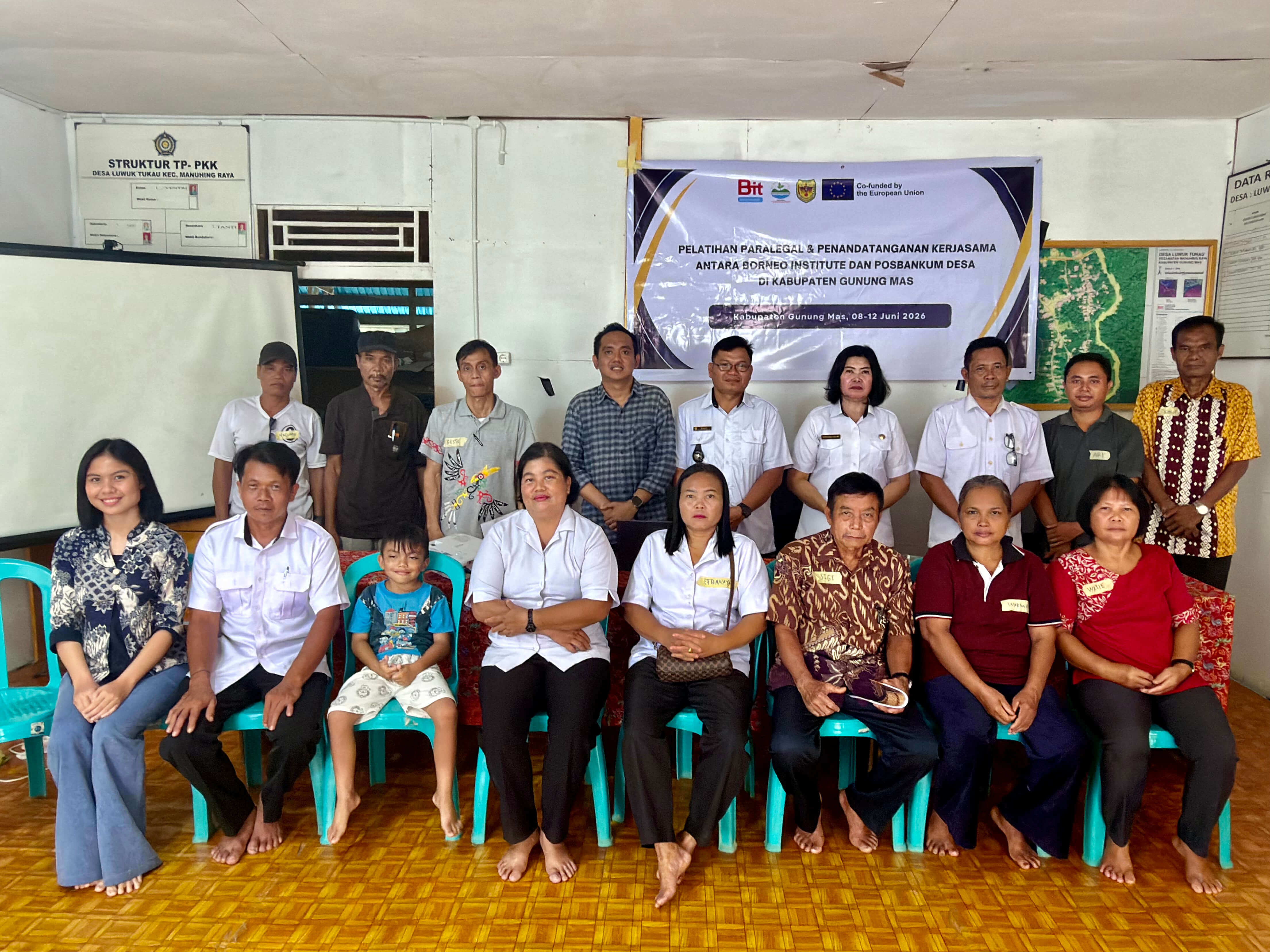
Strengthening the protection of the rights of the Dayak indigenous people and local communities over their land, customary territories, and natural resources. This focus encompasses providing support for the formal recognition of Indigenous Legal Communities (Masyarakat Hukum Adat/MHA), protecting *kaleka* (traditional ancestral sites/old village sites) and customary forests, and facilitating legal processes and tenure security to safeguard the rights and livelihood sustainability of these communities.
Promoting fair and inclusive policies and regulations that recognize the rights of Indigenous peoples and local communities. Through policy analysis, the drafting of regulations, the strengthening of community paralegal capacity, and multi-stakeholder dialogue, this division connects the aspirations of the community with decision-making processes, ranging from the local to the national level.
Developing participatory research and utilizing geospatial data to document social conditions, tenure issues, and the dynamics of land and natural resource management. The findings serve as a basis for formulating recommendations, strengthening the position of communities in advocacy processes, and promoting evidence-based public policies that prioritize the interests of those communities.